
Comprehensive Waste & Soil Classification Guide for Contractors, Developers and Site Teams
1. What is waste classification?
Waste classification determines:
- Whether soil is hazardous or non‑hazardous
- What contaminants are present
- Which disposal route is legally acceptable
Classification is required every time soil leaves site, unless it is being reused under an approved scheme (e.g., CL:AIRE DoWCoP).
2. When do you need to classify soil?
You must classify soil when:
- Excavating in previously developed land
- Working near industrial or commercial sites
- Removing made ground
- Soil is being sent to a waste facility
- There is visible staining, odour or contamination risk
If unsure – classify. Regulators expect an evidence‑based approach.
3. What is WAC testing?
Waste Acceptance Criteria (WAC) testing determines whether soil meets the acceptance criteria for a specific landfill type.
It does not classify the waste.
4. When is WAC testing required?
WAC testing is typically needed when:
- Soil is being disposed of at landfill
- The receiving facility requests it
- You need to confirm leachability
Not all soils require WAC testing.
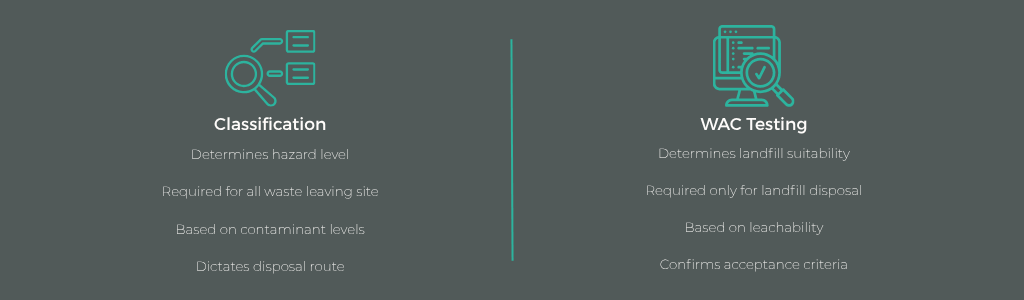
5. Key differences: Classification vs WAC
6. Common mistakes to avoid
- Mixing up classification and WAC
- Missing or incomplete documentation
- Assuming “clean” soil will pass inert WAC
- Losing track of test reports
- Not meeting SWUK MCP requirements
7. How SoilComply helps
- MCP‑aligned workflows
- Centralised document storage
- Clear separation of test types
- Full traceability and audit readiness
- Designed for Promoters, Tier 1s, Delivery Contractors and Labs
Need a simpler way to manage classification, WAC testing and SWUK MCP compliance?
Contact Spring Environmental to learn how SoilComply can support your workflow.